You’re floating in the Atlantic. The sun is shining. And suddenly… something cuts through the water just meters away. A group of dolphins, swimming free.
They’re not jumping for a show. They’re not doing tricks for food. They’re just there. Close. Wild. Free.
Seeing dolphins in Tenerife is one of those unforgettable experiences. But if you want to do it right—without stress, without crowds, without massive boats chasing animals—some places are better than others. And there’s one that stands above the rest.
🥇 Palm-Mar: the best place to see dolphins by kayak
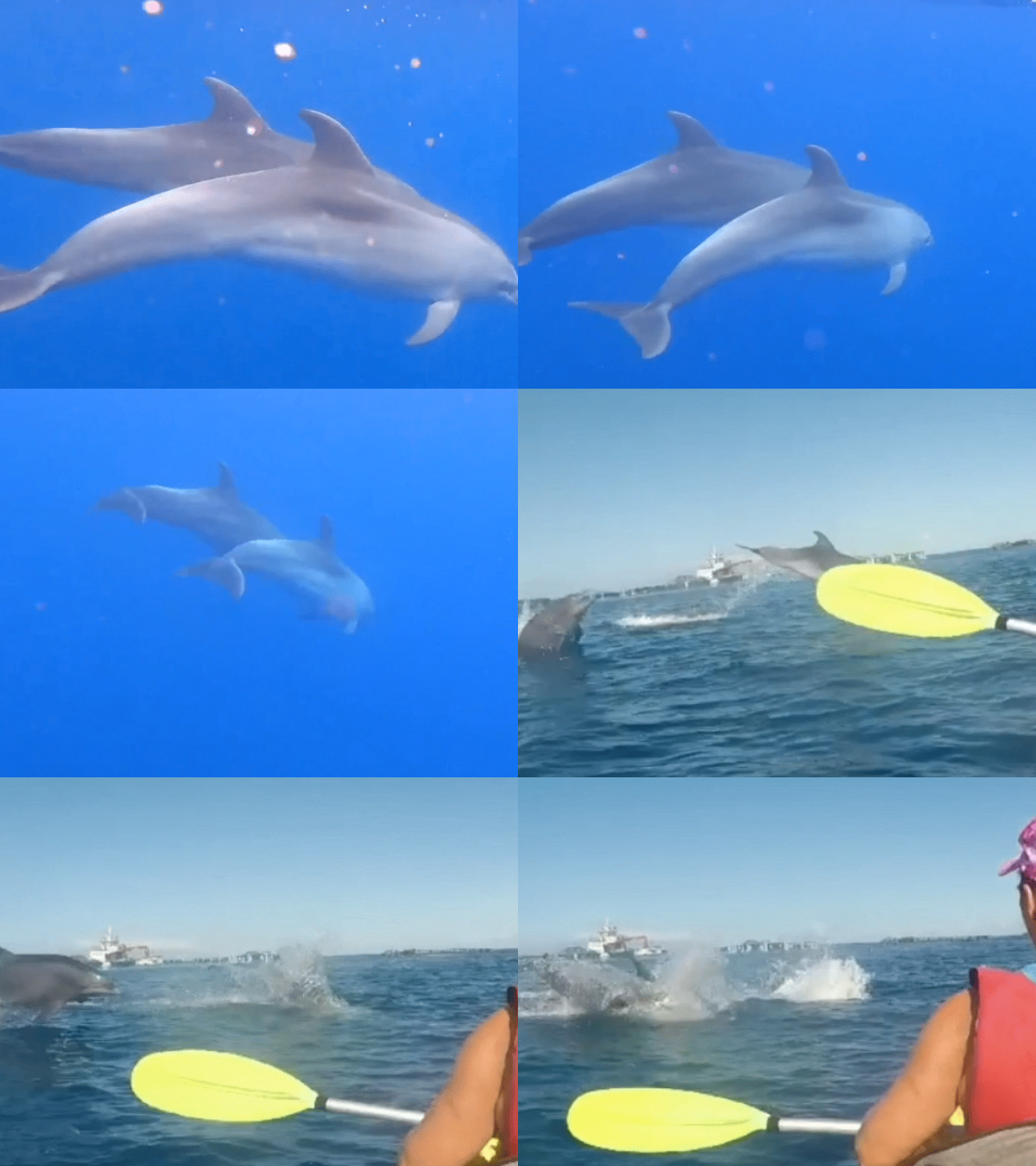
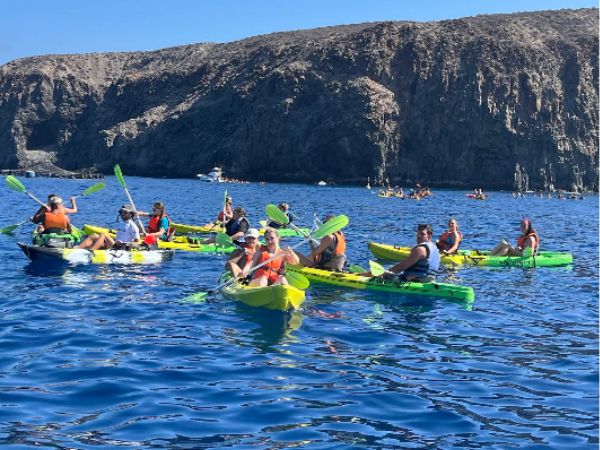
This little gem in the south of the island, next to the protected area of Malpaís de La Rasca, offers one of the most authentic dolphin-watching experiences in Tenerife. You don’t need a big boat—just a kayak tour is enough to find yourself paddling just a few meters from a pod.
You can spot dolphins from a kayak, with no engine, no noise, and without disrupting their natural rhythm. They swim in groups, approach with curiosity, and if you’re lucky, they might accompany you for several minutes as you paddle through crystal-clear waters.
Plus, the area is peaceful, with little maritime traffic, which increases your chances of sightings and reduces human impact on the ecosystem.
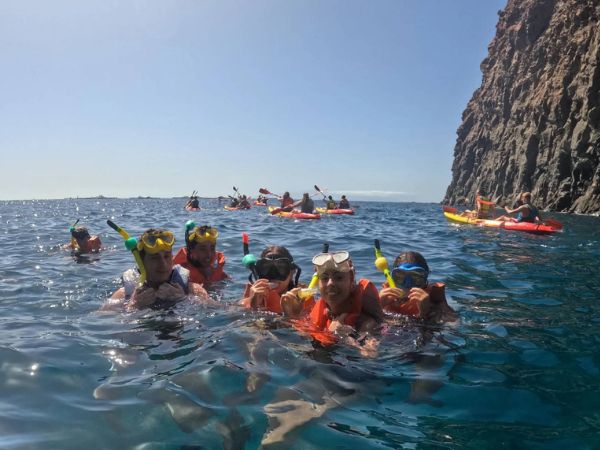
In our tour, after watching dolphins, you’ll also go snorkeling with sea turtles.
🐬 Book online and experience it firsthand 👇
🐬 Los Gigantes: dolphin and whale watching by boat
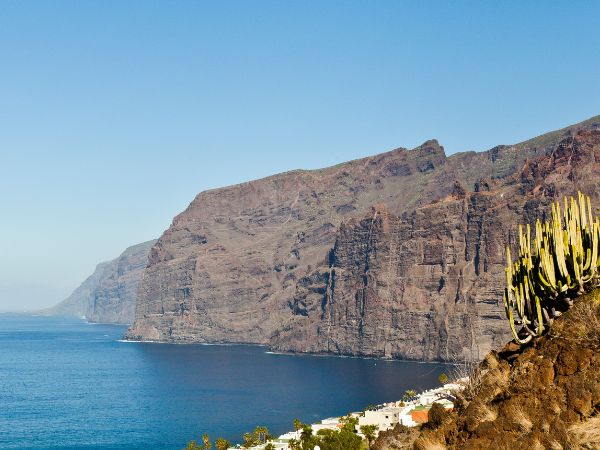
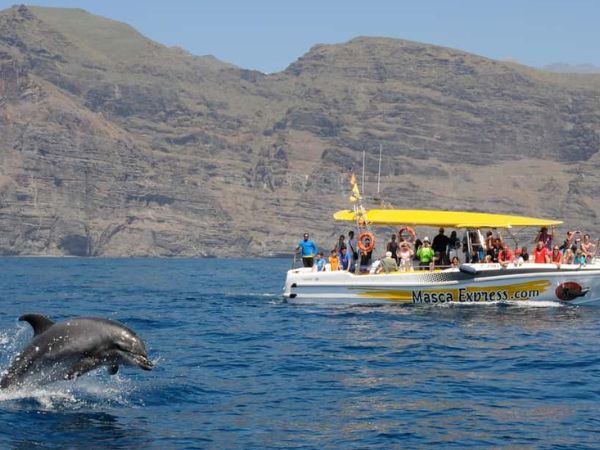
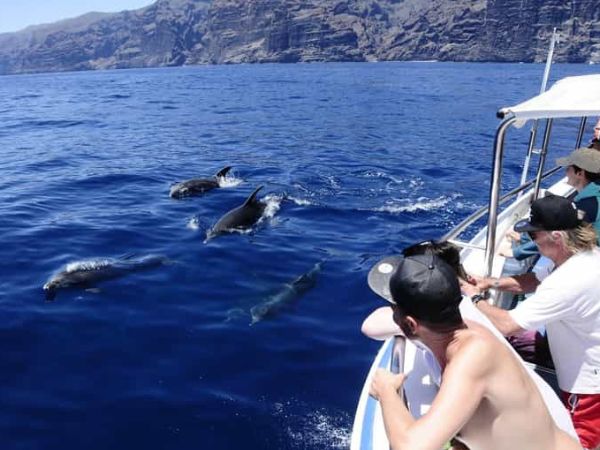
In front of the stunning cliffs of Los Gigantes, the deep waters are home to a large population of short-finned pilot whales (a large dolphin species, also known as “pilot whales”) and bottlenose dolphins.
This area is perfect for boat tours, with guides who know the movements of the pods and respect safe distances. If you’re looking for an open-sea experience with spectacular views and a high chance of sightings, this place will amaze you.
That said, try to choose companies that carry the Responsible Whale Watching Tourism seal to ensure your visit doesn’t harm the animals.
🐬 Costa Adeje: dolphin and whale watching by boat
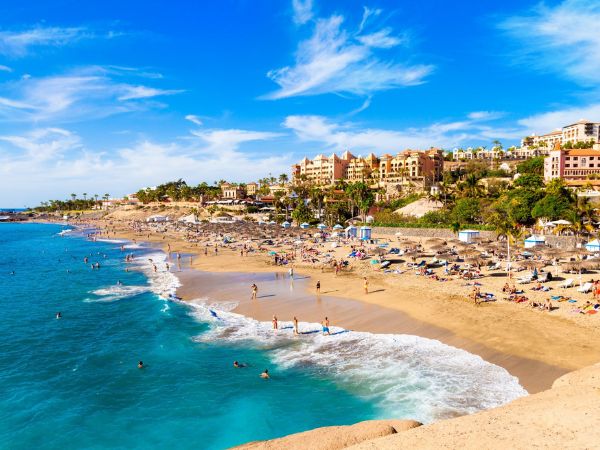
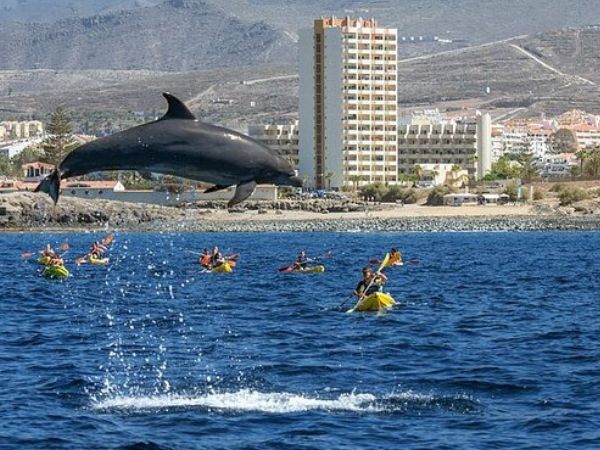
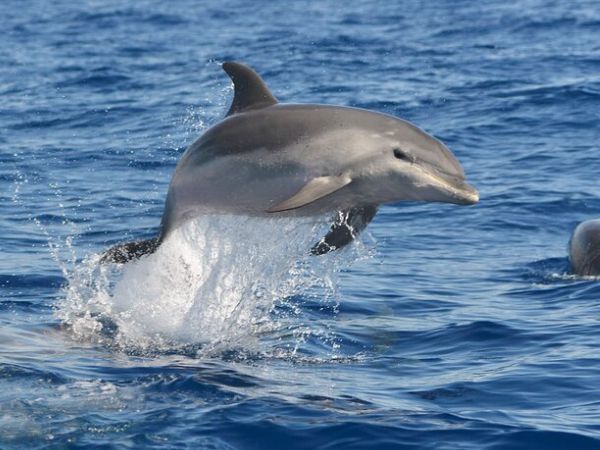
From the marina of Puerto Colón, dozens of tourist boats depart daily toward areas where dolphins and whales are often spotted.
It’s a very accessible option, ideal for families or travelers looking for comfort. Many tours include food, a swim stop, and a guide on board.
However, the experience can feel more touristic than natural, and not all operators care equally about the environment.
Choose wisely. Ask questions. And if you can, avoid mass tours. Dolphins don’t need an audience—just respect.
🐬 La Caleta: snorkeling and occasional encounters
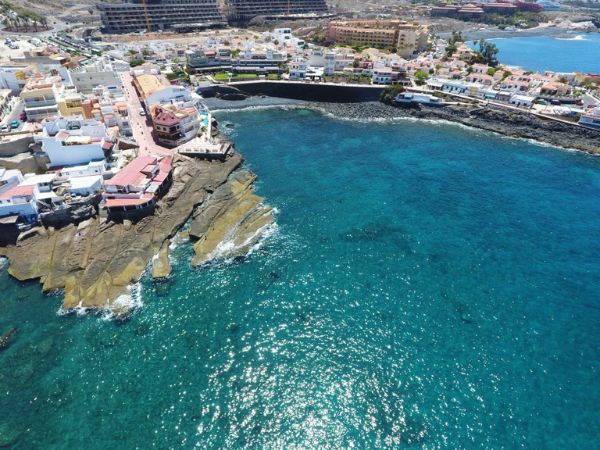
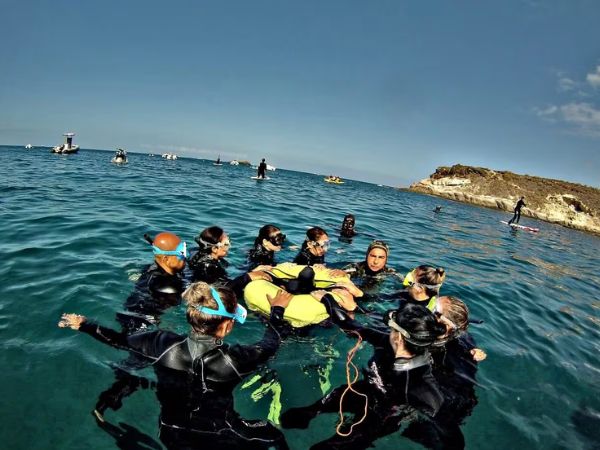
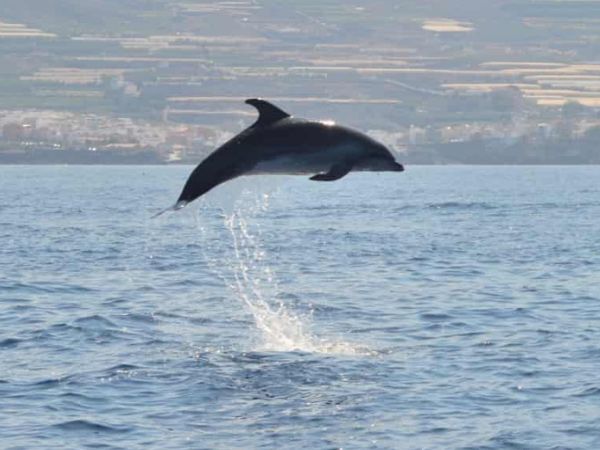
While not a designated dolphin-watching area, if you’re snorkeling or diving around La Caleta, you might get lucky and spot a group passing by.
It’s not common, but it happens—especially early in the morning, when the sea is calm and human activity is minimal.
What dolphin species can you spot in Tenerife?
The waters of Tenerife are home to some of the most impressive dolphin species in the Atlantic. Here we introduce them with names, facts, and what makes each of them so special. Spoiler: one of them isn’t even a dolphin… though it looks like one.
🐬 Bottlenose Dolphin (Tursiops truncatus) – The charismatic classic
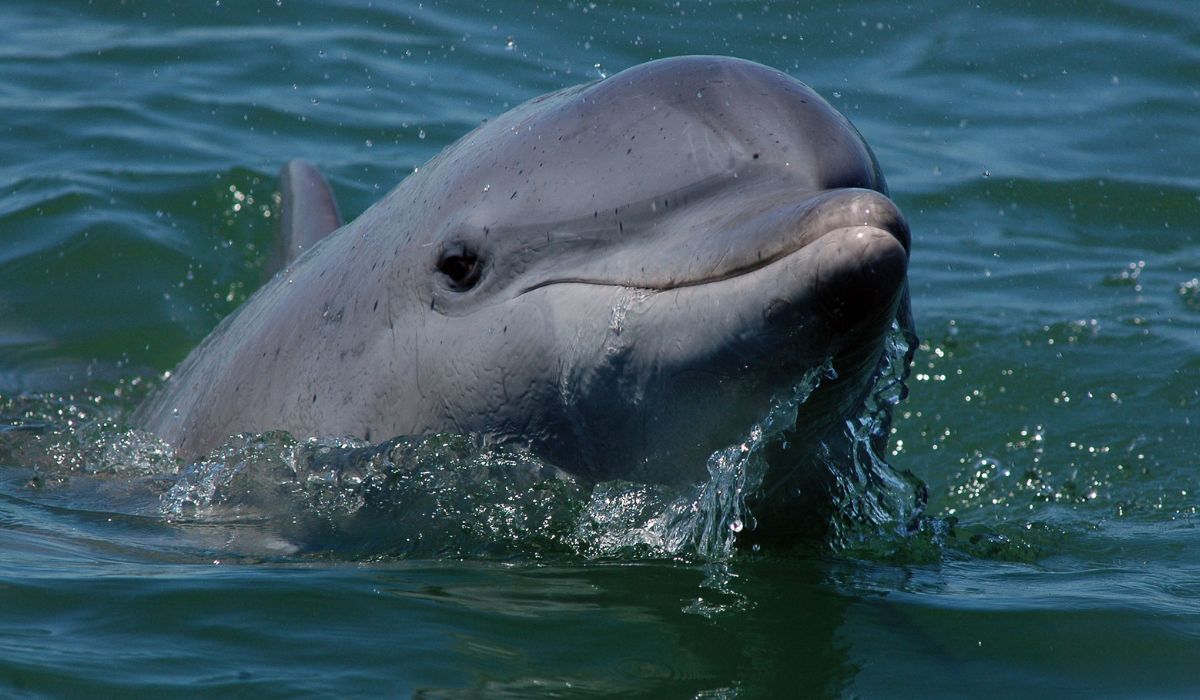
If you’ve seen a dolphin movie, it was probably him. The bottlenose dolphin is the most well-known, the most sociable, and the easiest to spot in Tenerife.
It has that natural smile, elegant leap, and a curiosity that brings it close to boats… or even kayaks.
How to recognize it:
- Robust body, light gray color with a paler belly
- Measures between 2 and 4 meters
- Swims in small groups, sometimes large pods
☝️ Fun fact: It has a large, complex brain. They communicate with sounds, recognize themselves in mirrors, and have social hierarchies.
In the south of the island—especially in Palm-Mar, Los Gigantes, and Costa Adeje—they’re commonly seen year-round.
🐬 Short-finned Pilot Whale (Globicephala macrorhynchus) – The “dolphin” that’s actually a whale
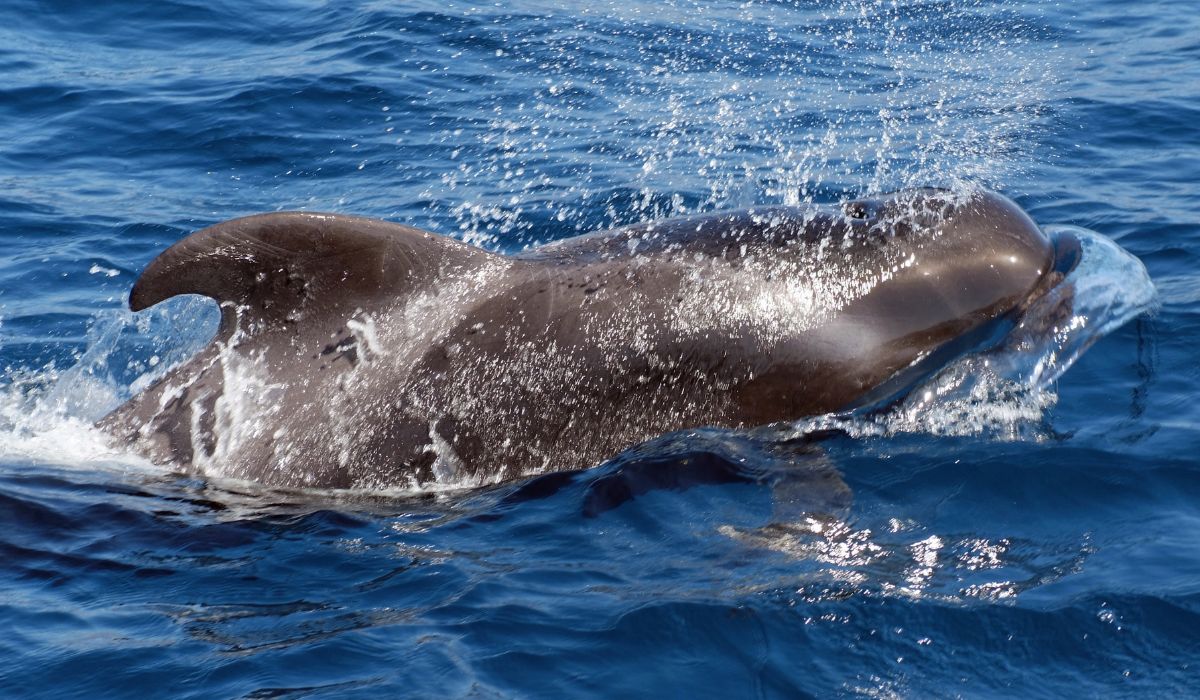
Here’s where it gets interesting: the short-finned pilot whale looks like a giant dolphin, but it’s a species of toothed whale. Still, it’s closer to dolphins than to blue whales, and it’s a regular resident in the deep waters of southwest Tenerife.
How to recognize it:
- Black or dark gray color
- Rounded head, no beak
- Up to 6 meters long and over 1,000 kg in weight
☝️ Fun fact: It’s a resident species in Tenerife, meaning it lives here year-round. You’ll mostly spot them near Los Gigantes and Adeje.
Despite its size, it’s peaceful and usually travels in tight-knit family groups.
🐬 Striped Dolphin (Stenella coeruleoalba) – The fast acrobat
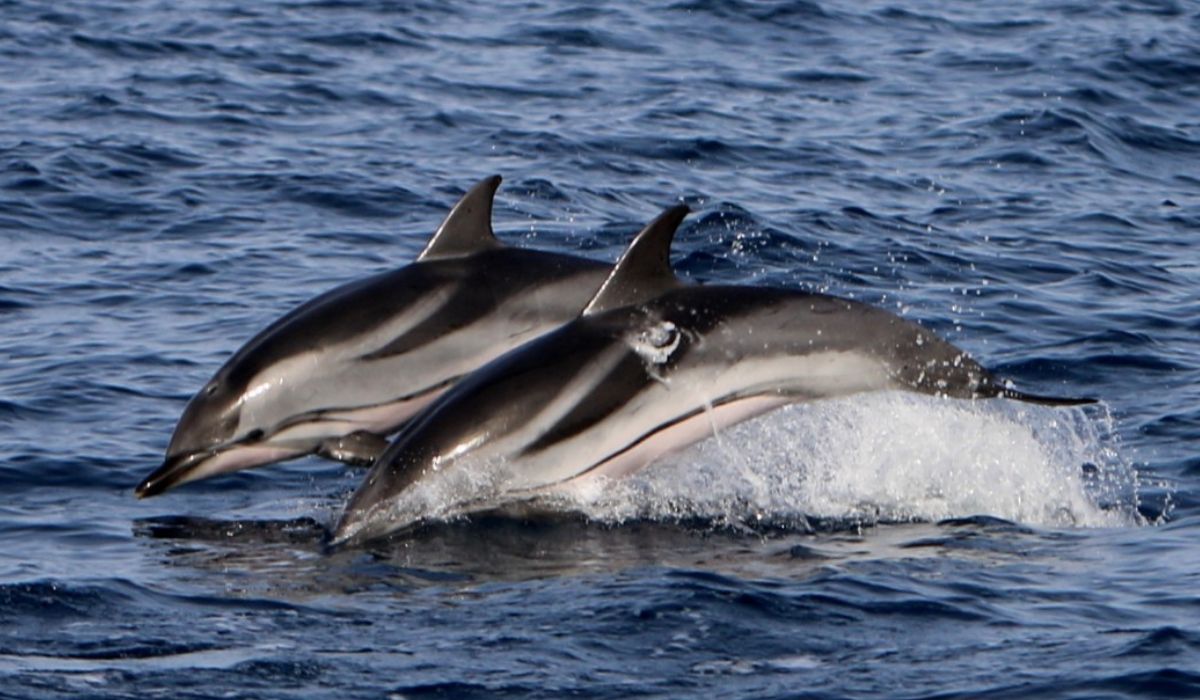
This is one of the most energetic dolphins and hardest to photograph. If you see it leap out of the water, get ready for a show—fast, high, and unpredictable.
How to recognize it:
- Light and dark stripes along its body, like it’s been “painted”
- Smaller size (between 2 and 2.5 meters)
- Prefers deeper waters and rarely approaches the coast
☝️ Fun fact: It can swim over 50 km/h and leap several meters high. If you see them in a group—it’s pure spectacle.
🐬 Common Dolphin (Delphinus delphis) – The great traveler
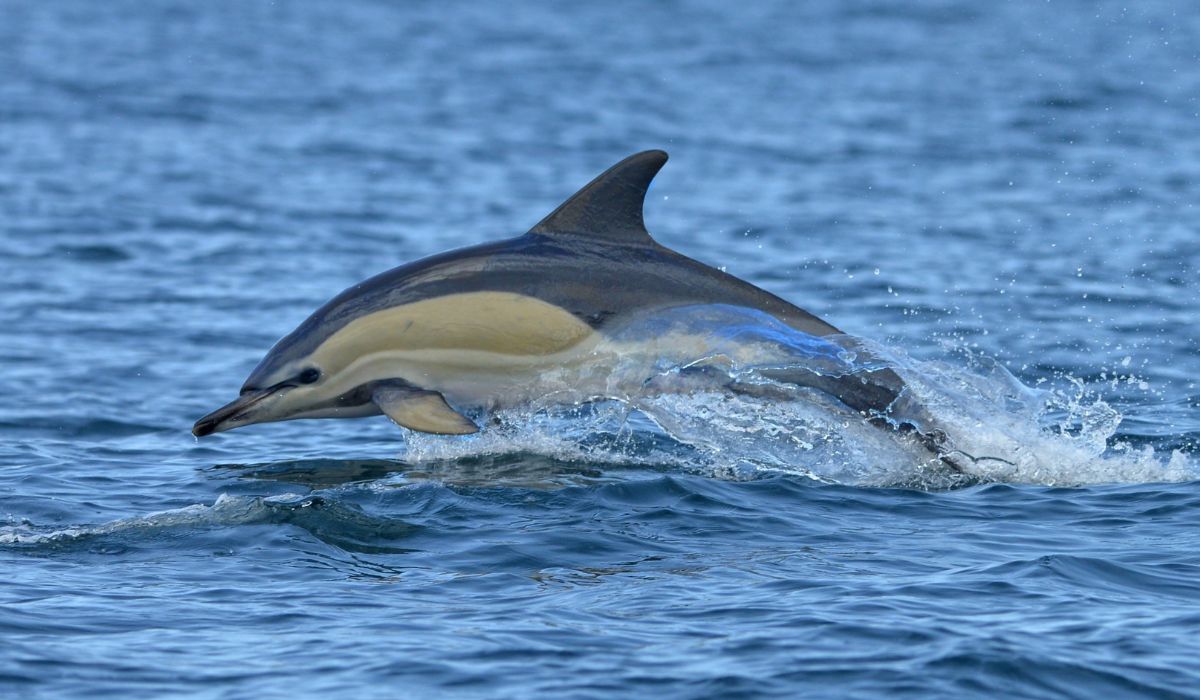
Though not the easiest to spot in Tenerife, the common dolphin appears from time to time, especially during migrations or in less frequented areas.
How to recognize it:
- Yellow or golden pattern along the sides
- Sleek and fast
- Swims in large, synchronized groups
☝️ Fun fact: Its coordinated jumps and speed make it one of the most spectacular to watch. It usually keeps to itself, but if you see it—it’s worth stopping to admire.
🐬 Book online and meet them in person in Palm-Mar 👇
📅 When’s the best time to see them?
All year round.
Tenerife has a resident population of dolphins and pilot whales, which means you don’t need to wait for a specific season. That said, days with calm seas and good visibility—especially in spring and summer—are ideal for spotting them clearly.
🚣♀️ Tips for watching dolphins responsibly from a kayak
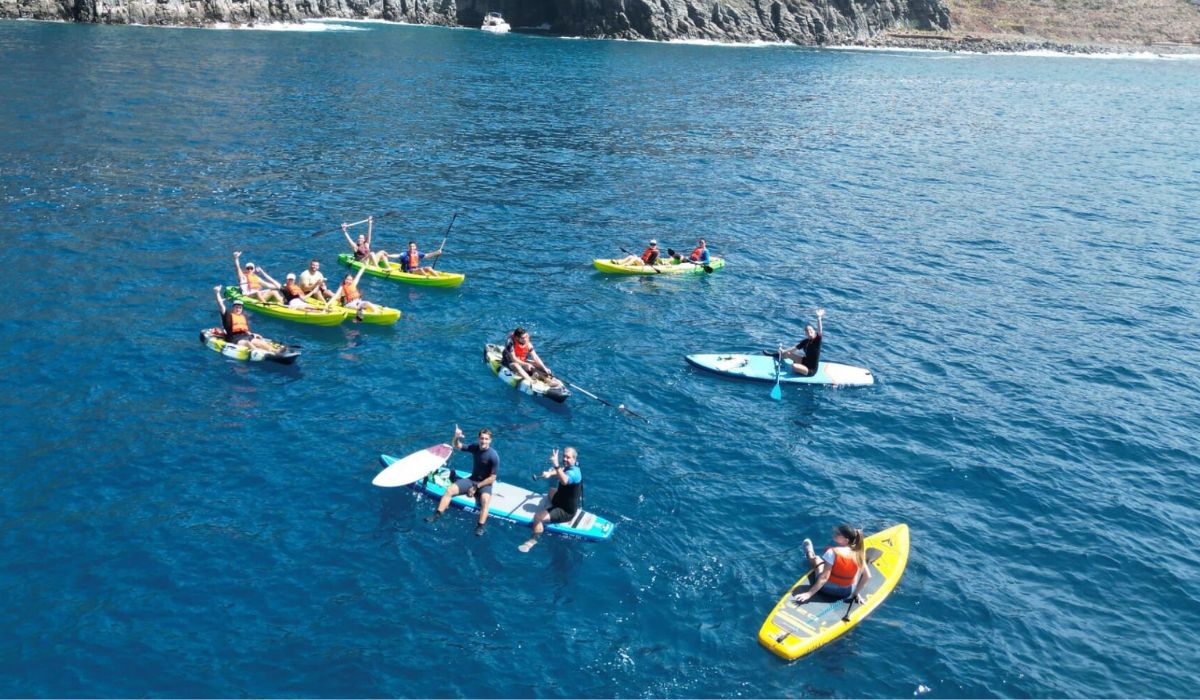
Seeing dolphins from a kayak isn’t the same as seeing them from a boat blasting loud music with 80 other tourists snapping pictures.
It’s a completely different experience—more real, more intimate.
But it comes with one golden rule: absolute respect for the animals.
If you want to enjoy the moment without disrupting marine life, here are some practical and conscious tips to do it right.
1. Don’t chase them. Ever.
If you see a pod swimming in the distance, your first instinct might be to paddle like crazy to get closer.
Don’t do it.
Dolphins are fast, sound-sensitive, and very aware of their surroundings. If they feel chased, they’ll swim away.
The best thing you can do is keep your distance, stay calm, and let them decide if they want to come closer.
Spoiler: they often do.
2. Stay quiet (even if you’re freaking out)
Kayaks already have an advantage: no engine, no noise, no pollution. But if you speak loudly, bang your paddle, or shout “a dolphin!” every time one surfaces… you ruin it.
Move calmly, paddle gently, and keep your voice low. The more natural your presence, the closer they’ll come.
3. Keep a safe distance
It’s about not invading their space. If they change direction, speed up, or dive suddenly, you’re probably too close.
And if they’re resting or swimming with calves, give them even more space.
4. Don’t block their path
Even in open water, remember: dolphins have routes, patterns, and direction.
If you cut across or try to intercept them from the front, you’re not only disturbing them—you could also put them at risk, especially if other boats are nearby.
Stay to the side. Be a spectator, not an obstacle.
5. Forget about touching them (don’t even try)
We know—it’s tempting. You’re in a kayak, a dolphin swims by, and you think, “Just a quick reach…”
❌ Wrong. This isn’t a theme park.
Touching wild dolphins is not only disrespectful—it can stress them out, alter their behavior, and expose them to human diseases.
Seeing them up close is a privilege. Leave it at that.
6. Don’t feed them (not even out of curiosity)
No sardines. No bread. Not “just a little snack for the photo.”
Feeding dolphins changes their behavior, makes them dependent on humans, and can affect their health.
It’s also illegal in many marine protected areas. If you want them to come close, let it be because of who you are, not what you give. (Okay, that sounded like a self-help quote—but it applies.)
7. Best tip: go with a professional guide
If it’s your first time kayaking or you’re not familiar with the area, your best option is to go on a tour with a local guide.
A good guide not only knows where and when to find dolphins, but also how to do it safely and respectfully.
They’ll explain safe distances, dolphin behavior, signs that you might be too close, and help you stay safe in the water.
And in places like Palm-Mar, where the sea is calm and dolphins often swim near the coast, the experience becomes unforgettable—and truly respectful.
🐬 Book our dolphin kayak tour with turtle snorkeling in Palm-Mar 👇
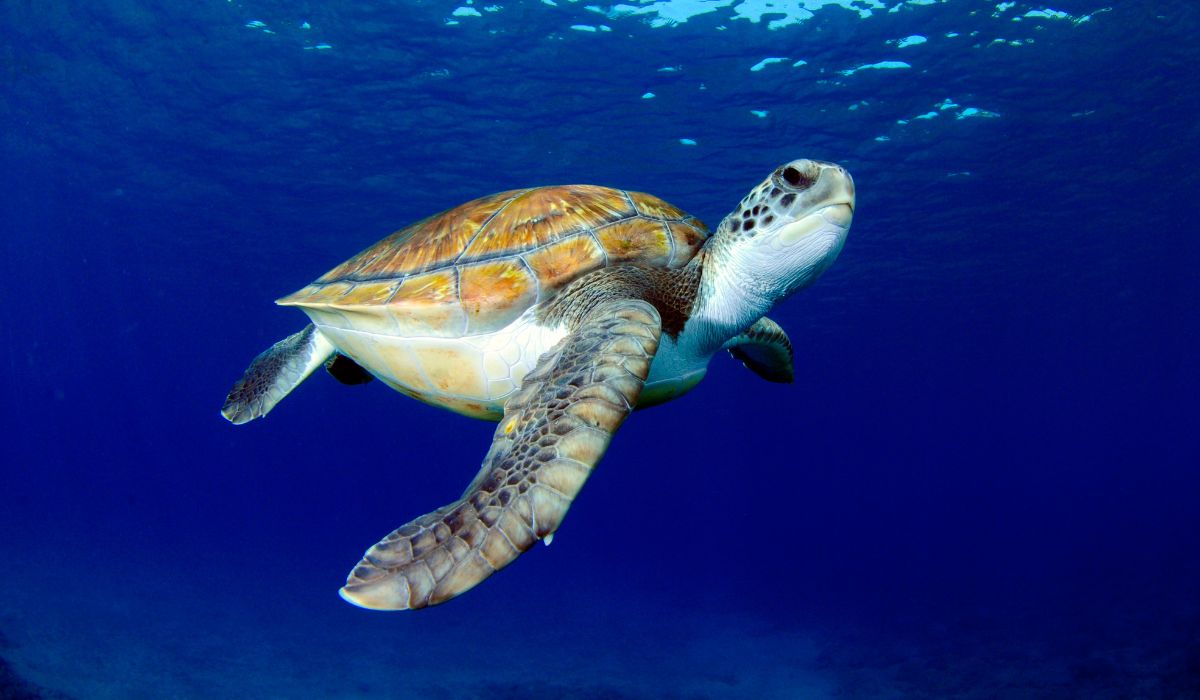
Where to see Turtles in Tenerife
The best spots on the island to snorkel with sea turtles.